Blog
From Silver to Science: The Evolution of Mining Through the Ages

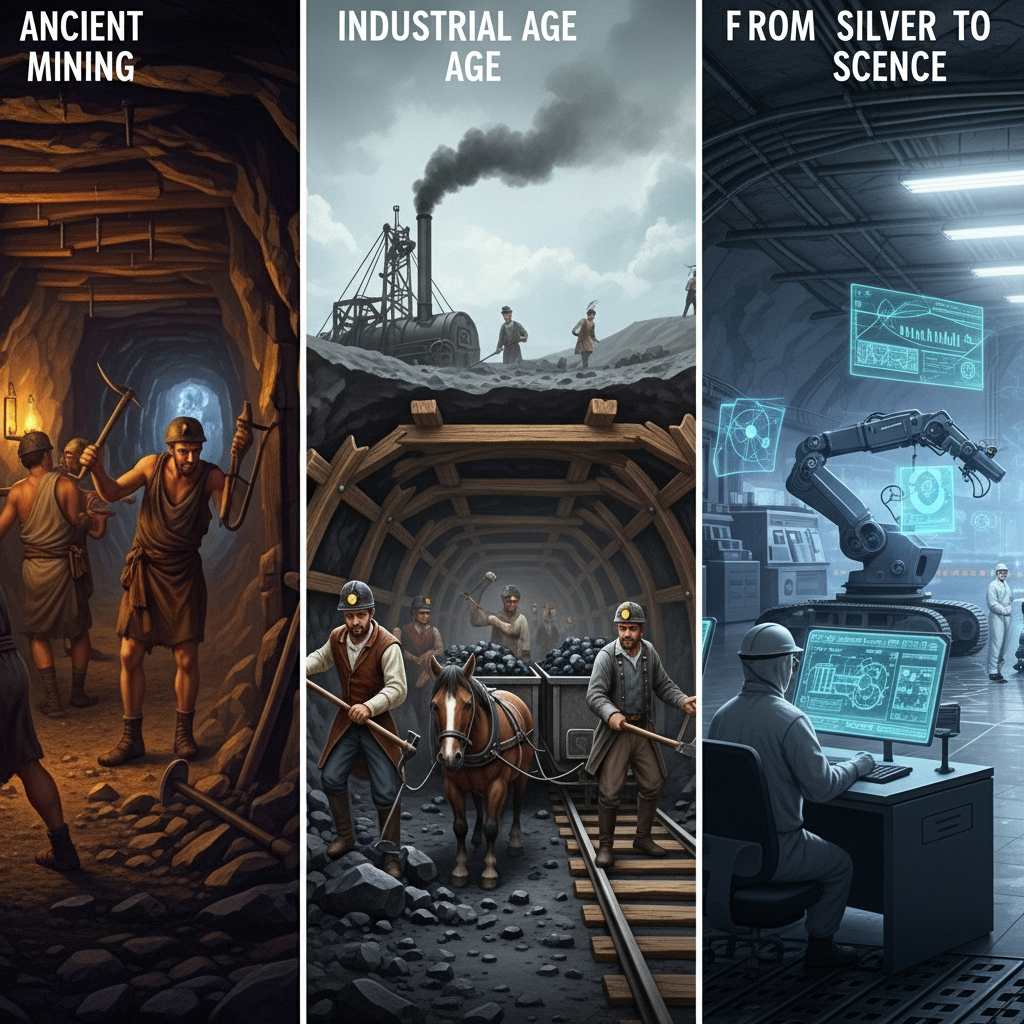
Mining has shaped human civilization for centuries, influencing science, technology, and society alike. From the silver-rich Erzgebirge Mountains of Germany to the legendary mines of Bolivia, the evolution of mining reflects the ingenuity and curiosity of humans throughout history.
In the 1500s, mining was more than a labor-intensive activity, it was a field of discovery. Georgius Agricola, often called the father of mining geology, documented the methods and techniques of mining in his groundbreaking treatise, De Re Metallica. Agricola’s work emphasized careful observation, systematic study, and applied science, setting the foundation for mining as both an art and a science.
From Germany, mining knowledge spread across Europe and into the Americas. The silver mines of Potosí in Bolivia became legendary, not just for their wealth but for their labor systems. The Incas had designed the mit’a system, a structured communal labor approach. However, when the Spanish arrived, they exploited it into forced labor, demonstrating how mining has always reflected societal values and abuses.
The Industrial Revolution brought new tools, methods, and theories. Advances in geology and engineering transformed mining from small-scale operations to industrial-scale extraction. Geologists applied scientific principles to locate and extract resources efficiently, while miners began demanding safer working conditions. Today, modern mines, like Canada’s open-pit operations, continue this legacy, blending historical ingenuity with cutting-edge technology.
Mining is more than extracting metals, it’s about understanding the Earth and shaping societies. From Agricola’s Renaissance sketches to modern engineering marvels, the history of mining highlights the ingenuity, adaptation, and resilience of humans striving to uncover the secrets beneath our feet.
This journey traces the path from Agricola’s foundational work in Germany to the vast silver mines of colonial Potosí. The tension between scientific progress and social responsibility remains, reminding us that mining continues to reflect the values, ethics, and priorities of each era.
Sean Daly is a geologist, mining engineer, and environmental advocate whose lifelong passion for Earth’s resources was shaped by his coastal upbringing in British Columbia. His work bridges ancient mining wisdom with modern geological science, offering a unique perspective rooted in both field experience and historical curiosity. Through global exploration and hands-on expertise, he brings the story of mining’s evolution vividly to life.
The contrast between Agricola’s scientific rigor and the exploitation at Potosí invites readers to consider how knowledge can be used to uplift or oppress. Modern mining operations are presented as inheritors of both traditions, balancing innovation with ethical scrutiny.