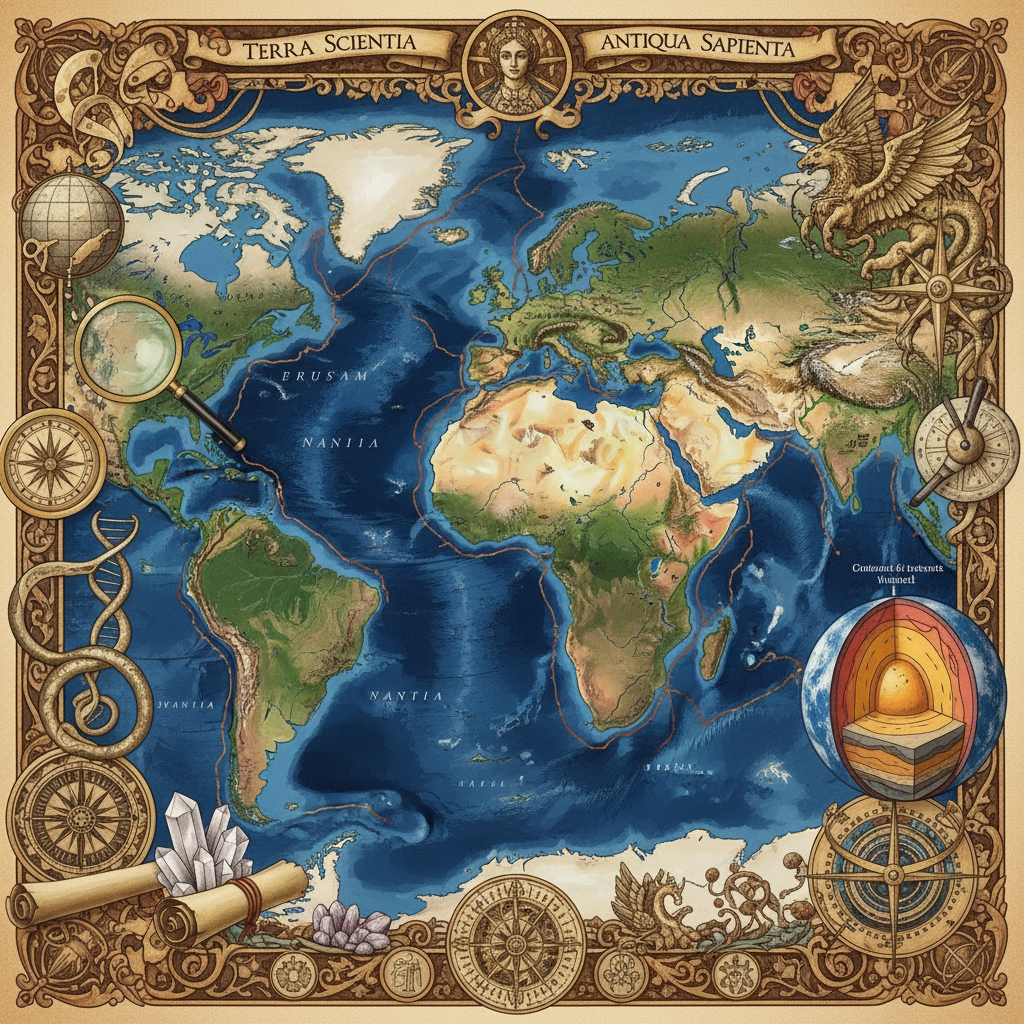
In the 1500s, Georgius Agricola emphasized careful observation and systematic study in his treatise De Re Metallica. He detailed methods for identifying rock formations, mineral veins, and geological patterns, showing that mining was not just about labor but about knowledge. Long before computers and GPS, mapping was the key to discovering where resources lay and how best to extract them.
In the modern era, mapping has become both an art and a science. Engineers and geologists now use advanced tools to design massive open-pit mines, such as those at Canada’s Highland Valley Copper Mine. Every rock layer, contour, and anomaly is carefully charted to optimize extraction, ensure safety, and minimize environmental impact. Yet the principle guiding these modern practices remains the same as Agricola’s: respect the patterns of the Earth and let them guide your work.
Mining has always relied on one timeless tool: understanding the ground beneath our feet. From Renaissance Europe to modern Canada, the ability to read the land has determined the success, safety, and efficiency of mining operations.
Traveling to famous mines in Bolivia, Chile, Ireland, and Spain reveals how ancient techniques continue to influence modern mining. By comparing centuries-old methods with today’s geotechnical practices, we see a continuum of innovation built on observation, adaptation, and careful study. Mapping is not just a technical process, it’s a way of understanding the Earth itself.
From hand-drawn Renaissance sketches to precision digital models, mapping has always been mining’s primary tool. Yet the core principle remains unchanged: reading the Earth carefully and respectfully is still the key to unlocking resources responsibly.
From Renaissance sketches to modern digital models, geologists and engineers continue to learn from history while applying cutting-edge technology. Each map, old or new, tells a story of human curiosity, ingenuity, and the ongoing dialogue between people and the land they work.
Sean Daly is a geologist, mining engineer, and environmental advocate whose lifelong passion for Earth’s resources was shaped by his coastal upbringing in British Columbia. His work bridges ancient mining wisdom with modern geological science, offering a unique perspective rooted in both field experience and historical curiosity. Through global exploration and hands-on expertise, he brings the story of mining’s evolution vividly to life.
The discussion calls attention to the responsibility geologists hold: interpreting landscapes not only for resource extraction but also for safety, sustainability, and environmental stewardship. By linking ancient mining regions to modern operations, it highlights how lessons from the past continue to inform present-day decisions.